📚 Understanding the Cardiac Cycle: A Key for NEET 2026
The NEET 2026 exam is approaching, and among the plethora of topics in Biology, understanding the cardiac cycle is crucial for aspiring medical students. The cardiac cycle encompasses all events associated with the flow of blood through the heart during one complete heartbeat. From the contraction of the heart muscle to the opening and closing of heart valves, each phase plays a pivotal role in maintaining effective circulation.
💡 Quick Tip: Remember to distinguish between diastole and systole phases when studying the cardiac cycle. This clear understanding is often tested in NEET exams!
🎯 Phases of the Cardiac Cycle
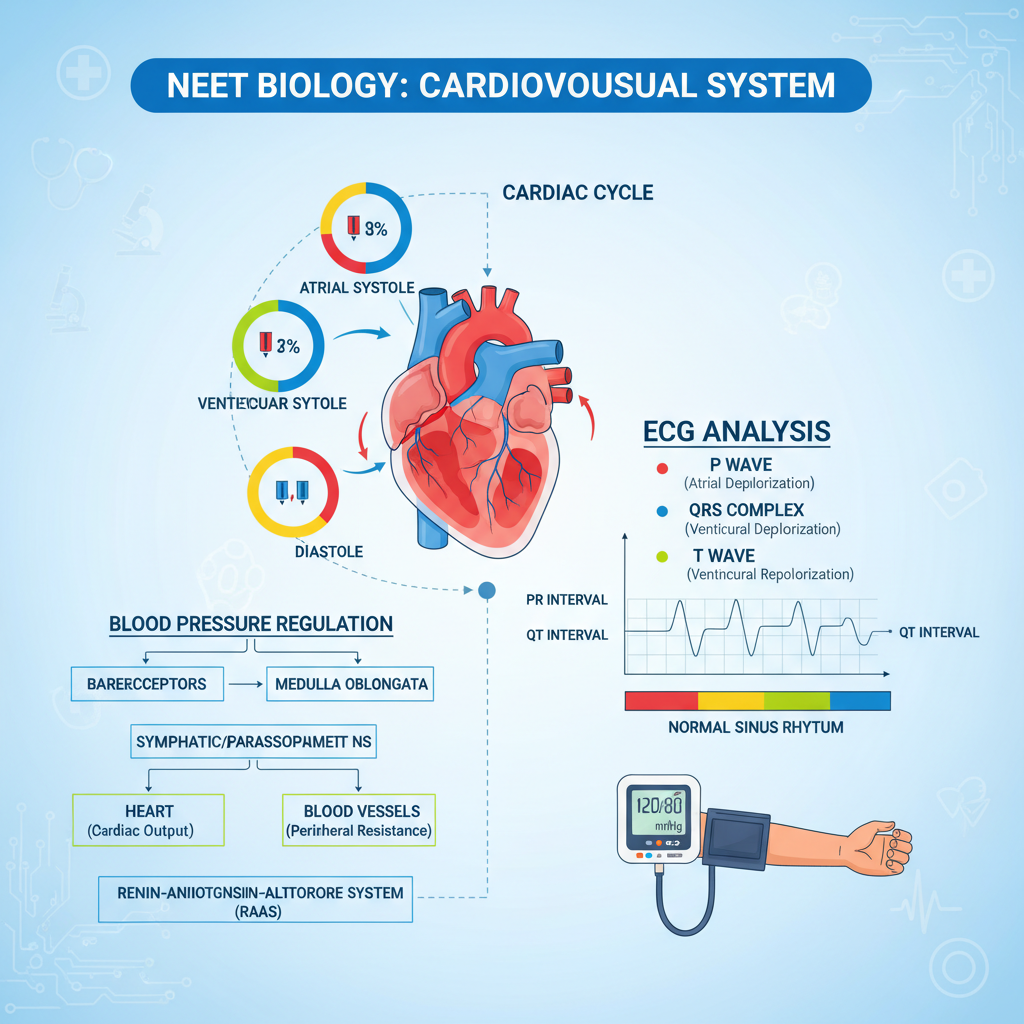
- ✅ Atrial Systole: The atria contract, pushing blood into the ventricles.
- 🎯 Ventricular Systole: Following atrial systole, the ventricles contract, ejecting blood into the arteries.
- ✅ Diastole: The heart muscles relax, allowing the chambers to fill with blood.
📊 Interpreting an ECG for NEET 2026
The Electrocardiogram (ECG) is a vital tool in understanding heart health, and interpreting it is part of the NEET syllabus. An ECG provides insights into the electrical activity of the heart, representing cardiac events in a graphical form.
🎯 Key ECG Components
- ✅ P Wave: Represents atrial depolarization.
- 🎯 QRS Complex: Indicates ventricular depolarization.
- ✅ T Wave: Reflects ventricular repolarization.
✅ Key Takeaways
- Familiarity with the cardiac cycle is essential for heart-related questions.
- ECG interpretation is crucial for diagnosing heart conditions.
- Understanding blood pressure regulation can aid in multiple-choice questions.
🔍 Blood Pressure Regulation in NEET 2026
Blood pressure is crucial for maintaining the supply of oxygen and nutrients to tissues. In the NEET syllabus, regulating blood pressure can arise in questions about cardiac output, vascular resistance, and hormones like epinephrine and aldosterone.
🎯 Factors Influencing Blood Pressure
- ✅ Cardiac Output: Higher output can lead to increased blood pressure.
- 🎯 Vascular Resistance: Narrowed blood vessels can increase blood pressure.
- ✅ Blood Volume: More blood volume increases pressure on vessel walls.
⚠️ Important: Pay attention to the homeostatic mechanisms involved in blood pressure regulation, such as the renin-angiotensin system!
📈 Connecting the Dots: Cardiac Cycle, ECG & Blood Pressure
In preparation for the NEET exam, it’s essential to understand how these concepts interlink. Effective circulation depends on the synchronous operation of the cardiac cycle, electrical signals from the heart indicated by ECG, and regulation of blood pressure.
🎯 Impact on Overall Health
- ✅ Arterial Health: Maintaining blood pressure is critical for preventing cardiovascular diseases.
- 🎯 Heart Ailments: Understanding ECG readings can help detect abnormalities early.
- ✅ Holistic Approach: Considering all these factors ensures comprehensive knowledge for NEET.
"A deep understanding of the cardiac cycle, ECG interpretation, and blood pressure management forms the cornerstone of cardiovascular health knowledge."
🎉 Revision Tips for NEET 2026
As exam day approaches, here are some effective revision strategies to reinforce your understanding of these critical topics:
- 1Create Mind Maps
- Visually link cardiovascular concepts to aid memory retention.
- 2Practice Past Papers
- Familiarize yourself with the exam format and key questions.
- 3Group Study Sessions
- Collaborate with peers to discuss and clarify difficult topics.
📝 Conclusion: Ready for NEET 2026?
Equipped with a comprehensive understanding of the cardiac cycle, ECG interpretation, and blood pressure regulation, you are now better prepared for the upcoming NEET 2026. Focus your revision on these interconnected topics to ensure success.
🚀 Ready to Ace Your Exams?
Join thousands of students using TC2R method. Start your free practice test today!