📚 Understanding Plant Growth Regulators for NEET 2026
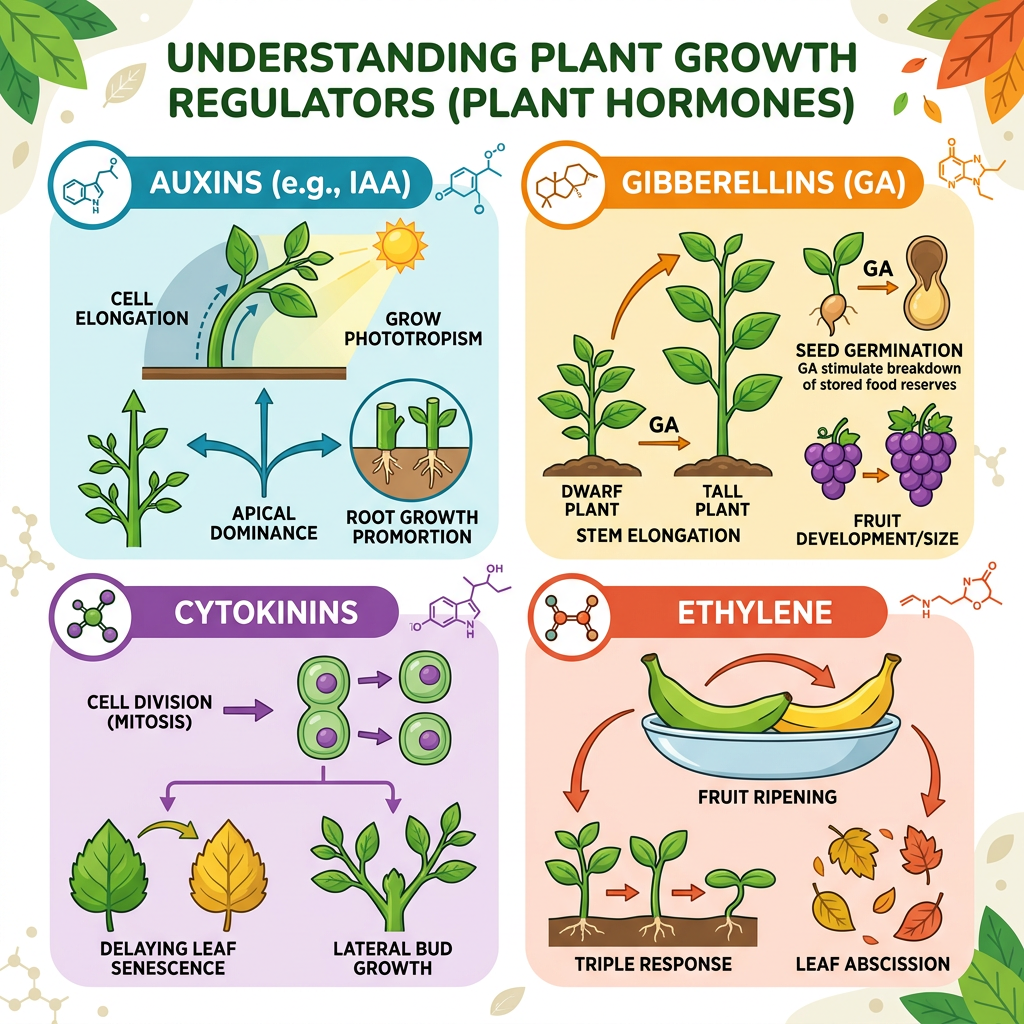
If you're gearing up for NEET 2026, understanding plant growth regulators like auxins, abscisic acid (ABA), gibberellins, cytokinins, and ethylene is crucial. These substances play a significant role in plant physiology and are often featured in the biology section of the exam. This guide will help you grasp their physiological effects, ensuring you are well-prepared for your exam.
💡 Quick Tip: Focus on understanding how each growth regulator affects plant processes for better retention and application in exam scenarios.
🔍 What Are Plant Growth Regulators?
Plant growth regulators (PGRs) are naturally occurring or synthetic chemicals that influence various aspects of plant growth and development. They are essential in processes such as germination, flowering, fruiting, and overall plant health. Here are the main types:
- 🍃 Auxins: Promote cell elongation and are involved in root development.
- 🌾 Gibberellins: Stimulate stem elongation and seed germination.
- 🌺 Cytokinins: Promote cell division and shoot formation.
- 🚨 Abscisic Acid (ABA): Signals leaf and fruit senescence and regulates stress responses.
- 🍈 Ethylene: Influences fruit ripening and leaf abscission.
🎯 Physiological Effects of Key Plant Growth Regulators
Each growth regulator has specific physiological effects that are important to understand:
🍃 Auxins
✅ Key Effects of Auxins
- Promote stem elongation
- Facilitate root growth
- Regulate fruit development
- Inhibit lateral bud growth (apical dominance)
🌾 Gibberellins
These hormones are essential for:
- 🌱 Seed Germination: Gibberellins break seed dormancy and promote enzymatic activity.
- 🌼 Flowering: They can induce flowering in some plant species under certain conditions.
- 📈 Increased Growth: Gibberellins promote longer stems and larger fruits.
🌺 Cytokinins
Cytokinins are primarily involved in:
- 🧬 Cell Division: Promote cell division and differentiation.
- 🌿 Leaf Expansion: Enhance leaf development and growth.
- 🍋 Delay senescence: They help in maintaining the vigor of plants by delaying aging and increasing longevity.
🚨 Abscisic Acid (ABA)
ABA is crucial for:
- ⚠️ Stress Response: Assists plants in coping with stress such as drought.
- 🍂 Leaf Fall: Triggers leaf senescence and abscission.
🍈 Ethylene
Ethylene’s role includes:
- 🍍 Fruit Ripening: Ethylene is key in regulating the ripening process of fruits.
- 🍃 Leaf Abscission: Initiates the drop of leaves and fruits.
⚠️ Important: Understanding the mechanisms and effects of these regulators can significantly enhance your performance in the NEET 2026 exam. Focus on the physiological roles each plays in plants as you prepare.
🏆 Strategic Preparation for NEET 2026: Plant Growth Regulators
To efficiently prepare for this important topic in NEET 2026, consider the following strategies:
1Study Regularly
- Set a study schedule that allows you to revisit plant growth regulators periodically, reinforcing your understanding.
Utilize Diagrams
- Diagrams and flowcharts can help visualize processes associated with each growth regulator, making retention easier.
Practice MCQs
- Test your knowledge with multiple-choice questions specifically on this topic to familiarize yourself with the exam format.
🚀 Ready to Ace Your Exams?
Join thousands of students using TC2R method. Start your free practice test today!
🔚 Conclusion
Understanding plant growth regulators is not just vital for NEET 2026; it is crucial for anyone interested in botany and plant science. Review these concepts thoroughly, engage with practice questions, and utilize the TC2R method to achieve a strong grasp of the topic. With consistent effort, you'll be well-equipped to tackle any questions that arise on your exam. Best of luck on your NEET journey!
FAQ
📃 Frequently Asked Questions
- What are the key functions of auxins?
- Auxins promote cell elongation, regulate fruit development, and inhibit lateral bud growth.
- How do gibberellins affect fruit size?
- They stimulate elongation in stems and can lead to larger fruit sizes by enhancing cell division.
- What is the role of abscisic acid?
- ABA helps plants cope with stress, regulates leaf fall, and initiates the closing of stomata.
- How does ethylene influence ripening?
- Ethylene accelerates the ripening of fruits by activating genes responsible for ripening processes.