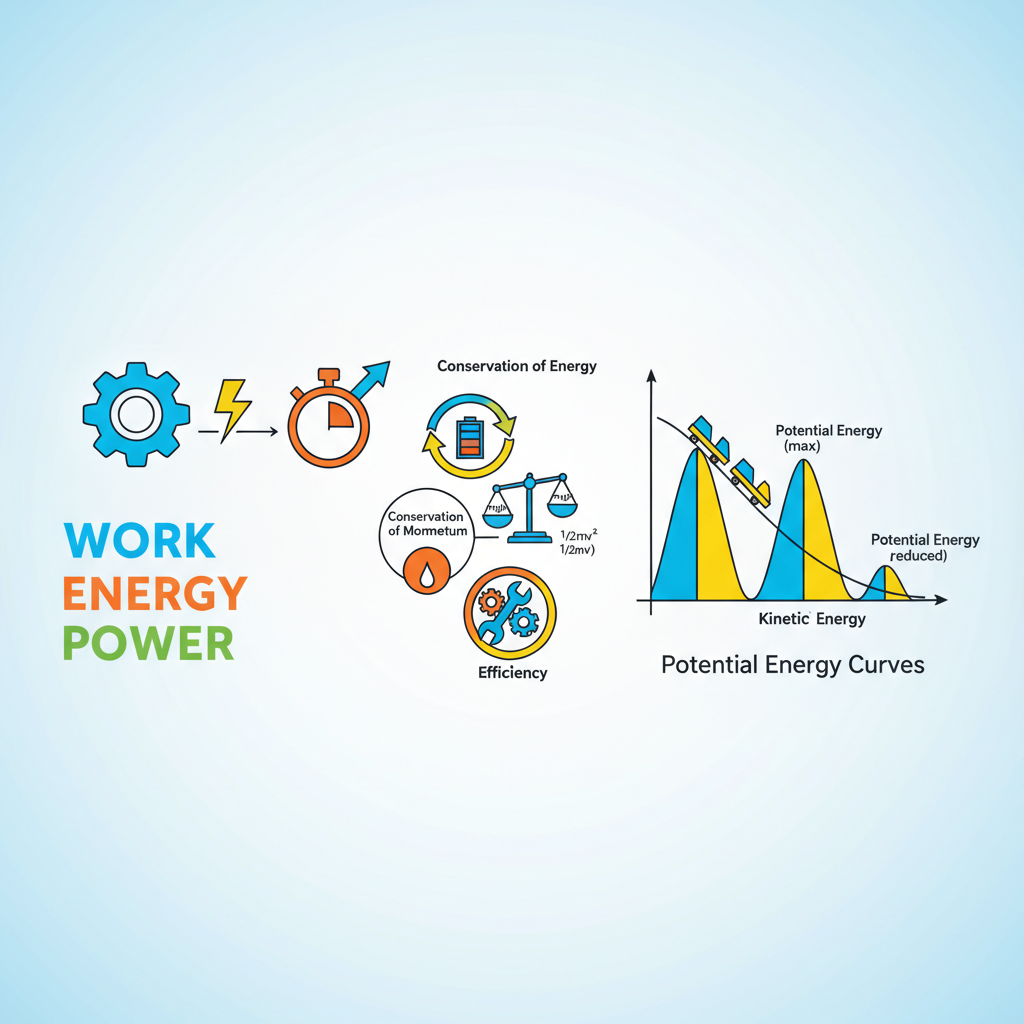
Work, Energy and Power Concepts for JEE 2026 Preparation
If you're aiming for top scores in the JEE 2026, mastering the concepts of work, energy, and power is crucial. Understanding how these principles interact will not only bolster your physics knowledge but also improve your problem-solving skills. In this comprehensive guide, we’ll cover conservation principles and delve into potential energy curves, tailored specifically for JEE aspirants.
💡 Quick Tip: Focus on real-life applications of these concepts to better understand them and remember key definitions!
📚 Understanding Work, Energy, and Power
The concepts of work, energy, and power are interconnected in physics. Let's break them down:
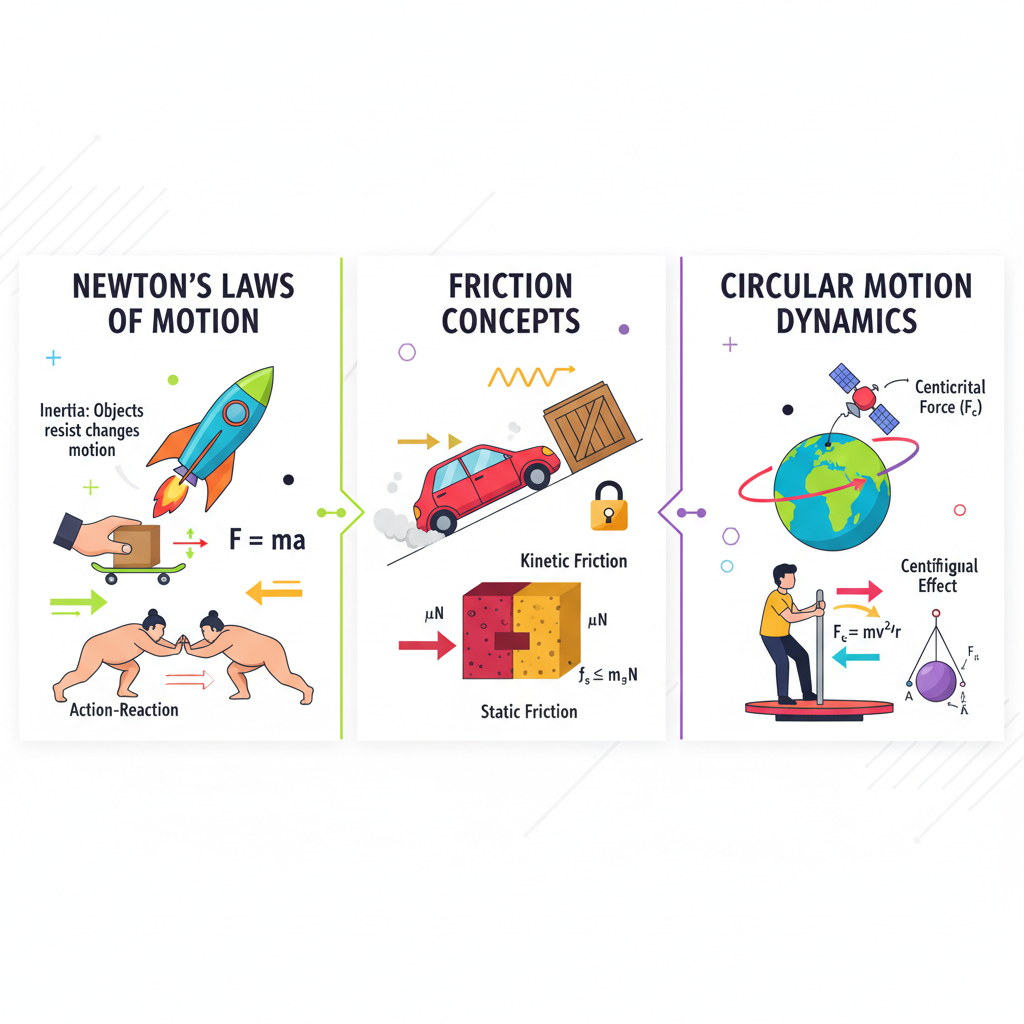
- ✅ Work: Work is defined as the force applied to an object times the distance moved in the direction of the force. The formula for work done (W) is:
- W = F × d × cos(θ)
- 🎯 Energy: Energy is the capacity to do work. It exists in various forms such as kinetic, potential, thermal, etc. The two main types relevant here are:
- Kinetic Energy (KE): KE = 0.5 × m × v²
- Potential Energy (PE): PE = m × g × h
- Power: Power is the rate at which work is done or energy is transferred. The formula is:
- P = W/t
🎓 Example: If you push a box with a force of 10 N over a distance of 5 meters in the same direction, you do 50 joules of work!
🔍 Conservation Principles in Physics
Energy conservation is a fundamental principle in physics, highlighting that energy cannot be created or destroyed, only transformed from one form to another. This principle can be expressed in several ways:
- 🌟 Mechanical Energy Conservation: In isolated systems, mechanical energy (sum of kinetic and potential energy) remains constant if only conservative forces act. Example: A swinging pendulum.
- 🏆 First Law of Thermodynamics: The change in internal energy of a closed system is equal to the heat added to the system minus the work done by the system.
- 🌌 Energy Transfer: Energy can be transferred between kinetic and potential forms, as demonstrated in roller coasters or swinging objects.
🛠️ Potential Energy Curves
Potential energy curves graph the potential energy of an object as a function of position. Understanding these curves can elucidate how energy changes during motion:
Graph illustrating potential energy curves in physics.
Key elements of potential energy curves include:
- 📊 Turning Points: Points where the potential energy is at a maximum or minimum indicate stable and unstable equilibria.
- ⚡ Shape of the Curve: The shape indicates how rapidly potential energy changes with position which affects the motion dynamics.
📘 Quick Reference: Always analyze potential energy setups in mechanics problems to predict motion effectively!
📝 Solving JEE Problems on Work, Energy, and Power
When tackling questions related to work, energy, and power for JEE 2026, follow these steps:
- 1Identify the Type of Problem
- Determine if it's related to kinetic energy, potential energy, or work done.
- 2Apply Relevant Formulas
- Use the correct equations based on the identified concepts.
- 3Analyze Given Data
- Carefully read the question for necessary values and units.
- 4Calculate Step by Step
- Proceed with calculations while checking units to ensure accuracy.
⚠️ Important: Always double-check your work during exams to avoid small mistakes leading to wrong answers!
🌟 Key Takeaways
✅ Key Takeaways
- Understand the relationship between work, energy, and power.
- Master the conservation principles and apply them in problem-solving.
- Practice potential energy curves for better graphical understanding.
🌈 Conclusion
The principles of work, energy, and power are foundational for success in JEE 2026 physics. By reinforcing your understanding of these concepts and practicing regularly, you set yourself up for excellent performance on your exam. Consistent practice and reviewing energy conservation principles will make a significant difference.
🚀 Ready to Ace Your Exams?
Join thousands of students using TC2R method. Start your free practice test today!